Land as the sacred mother
The PeasantsLand as the sacred mother is both a governing image and a lived reality in The Peasants. The earth sustains Lipce, receives the peasants’ labor, and is approached through gestures of prayer and reverence; it is not merely a backdrop to village affairs. Yet the same land is scarce, unequally controlled, and bound up with work, hunger, and disputes over the forest. The novel’s maternal vision therefore holds together nourishment and vulnerability: the earth can offer abundance, but it cannot protect everyone from the social conditions that determine who may work it and who goes without.
A Nurturing Landscape
The landscape is repeatedly described through the language of maternal care. In early spring, fields surround Lipce like a sea, while the earth seems to cradle its children and press them to a swollen, nourishing breast. This image makes the village’s dependence on its cultivated surroundings intimate and bodily. The fields do not simply produce crops; they are imagined as a mother holding and feeding the people whose lives are rooted in them.
That promise of nourishment is made vivid by the spring landscape’s abundance of color and growth. The mornings seem radiant, ditches are gilded with dandelions, baulks shimmer with flowers, and the earth appears to seethe with renewed life. But this flourishing beauty is sharply contrasted with fields left unploughed and unsown. Weeds spread across fertile soil while farmhands remain idle and the land lies fallow. The scene insists that nature’s capacity to renew itself is not the same as human well-being: fertile earth cannot feed a community when social circumstances keep it from being worked.
The land’s maternal character is thus neither a simple pastoral ideal nor a guarantee of security. The earth is generous in the imagery, but its gifts depend upon labor, access, and the organization of village life. When those conditions fail, the contrast between living soil and neglected fields becomes a measure of crisis.
Labor as Devotion
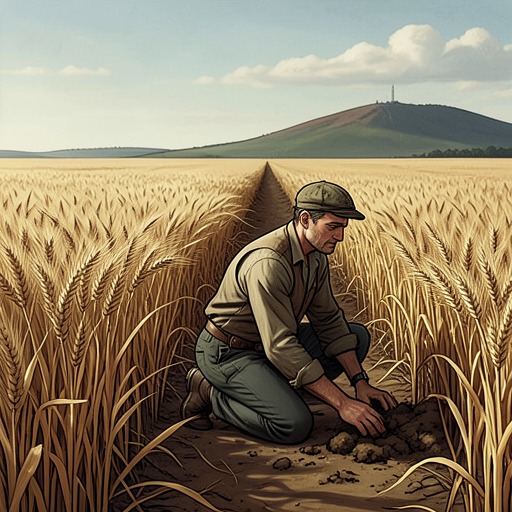
When Lipce’s fields are finally returned to cultivation, work takes on the character of a communal rite. Carts, ploughs, people, and animals fill the previously torpid landscape. The first ploughs press into the earth, turning up dark, shining clods. The workers pause, cross themselves, look across the fields, and then bend to their task. Their gestures connect physical labor with religious observance: cultivation begins not as routine alone but as an act undertaken with humility before the earth.
Sowing deepens that connection. The villagers scatter seed in silence, entrusting themselves to Mother Earth and placing their labor within a hope for a fruitful future. The act is at once practical and devotional. Seed must be planted for food to grow, but the scene also presents sowing as a pledge made under conditions of uncertainty: the workers commit their effort to soil whose eventual yield they cannot control.
The spring processions give this reverence a public, liturgical form. At a flowering mound, villagers circle a cross with lights and banners, kneel, and listen as the priest of Lipce prays against hailstorms and sprinkles holy water toward the four corners of the world, over land, trees, water, and the people. The rite places the growing season within a sacred order that includes both human and nonhuman life. Its concern with hail also acknowledges how vulnerable that life remains to forces beyond the farmers’ command.
Elsewhere, the priest looks across rolling arable fields figured as the breasts of nursing mothers, an open bosom where what falls may find nourishment and forget harsh fate. The recurring maternal image links the cultivated earth to refuge and sustenance, while the procession’s scale makes the people seem small within the landscape. The land is revered not because it is mastered, but because the community depends upon it.
Hunger Beside Fertility
The maternal ideal becomes more complicated when the narrative turns to poverty. During a hard winter, hired workers face frozen potatoes, little money, and the prospect of a meager preharvest season. Some eat a hot meal only once a day and still go to bed hungry. They had expected the squire’s felling at Wolf’s Hollow to provide employment, but learn that he does not intend to hire men from Lipce. Their need is not abstract: the work they expected to sustain them has been withheld at the very moment winter and scarcity press hardest.
A report of conditions among the poor gives this deprivation a domestic scale. Filipka’s cottage is cold, its windows stuffed with straw; the household has one bed, no potatoes, and has sold its quilt. Food must be begged or sought on credit until harvest. Elsewhere, Florka has given birth while sick and without savings or help; her husband is imprisoned, the fields are standing fallow, and she has no milk to feed the newborn. The earth may be fertile, but the family cannot simply draw security from it when labor is absent, resources are exhausted, and those who could assist do not.
The criticism extends beyond the landowner’s employment decision. A speaker observes that some farmers are occupied with filling their own stomachs or lending at high interest, while the poor live nearby without troubling the better-off. The village’s proximity does not create solidarity automatically. Invoking divine order can become a way to leave the suffering to God while protecting one’s own comfort. Against that indifference, the sacred image of the earth carries an ethical implication: a community that calls the land nourishing must also confront the people who are hungry upon it.
Shared Land and Contested Rights
The forest conflict turns attachment to land into an explicit claim of justice. In a public appeal, a speaker recalls accumulated injuries, unsuccessful complaints, and failed recourse to the courts before identifying the felling of the wood as the latest offense. The manor is accused not only of cutting the forest but also of denying the villagers employment and repeatedly driving them toward ruin. The forest is spoken of as belonging to the community, and the villagers’ anger grows from the gap between their asserted right and their inability to make powerful owners recognize it.
This collective claim is grounded in material need as well as reverence. The people seek access to resources and work that can sustain households; the forest cannot be treated as an isolated natural symbol detached from the village economy. The same moral pressure appears in the winter expectation that felling would provide work. When the manor excludes Lipce laborers, its decision turns control of the land and trees into immediate hardship for those who depend on employment.
The novel’s wider historical and political context sharpens the significance of this attachment. After the abolition of serfdom, peasants were formally freed from obligations to provide unpaid labor, but rural poverty, illiteracy, and limited prospects persisted. The question of how former serfs might become members of a Polish national community therefore meets a village world organized around land, work, and local rights. The forest assembly’s address to farmers and hired hands attempts to gather different groups through their shared experience of injustice. Yet political unity remains uncertain: at another meeting, a farmer from Przyłęk accuses Rocho of siding with the gentry and turning people against officials, a charge that others shout down. The land can furnish a common stake, but it does not erase mistrust or guarantee agreement about political leadership.
Narrative Significance
The sacred-mother image binds the novel’s seasonal and social registers without resolving their tensions. Spring returns, the plough enters the soil, and sowing renews the community’s hope; these recurring acts place human life within rhythms larger than any single conflict. At the same time, the fields’ fertility does not undo poverty, and devotion does not itself redistribute access or compel powerful people to act justly. Renewal is real, but it requires labor and remains exposed to weather, ownership, and social neglect.
The earth therefore serves as more than a symbol of comfort. It is the material ground of identity and survival, a focus of religious reverence, and the object of disputes over rights and livelihood. Its maternal generosity makes deprivation more visible rather than less: hunger in a fertile village and fallow fields among people who need work expose the failure of human arrangements, not an absence of natural abundance. In this tension, the land’s sacredness becomes a standard by which the village’s treatment of its poor and its claims against the manor can be judged.